29 Temmuz 2016 Cuma

Bulgaria

From wild, wooded mountain ranges speckled with remote villages and enchanting monasteries to vibrant modern cities and long sandy beaches hugging the Black Sea coast, Bulgaria rewards exploration.

Black Sea Beaches

It isn't hard to see why so many foreign – and Bulgarian – holidaymakers descend on the Black Sea coastline each summer. The long, professionally maintained sandy beaches at the big resorts are the equal of some of the most popular Mediterranean destinations, and, if you just want to relax, top up your tan or try out some water sports, there's nowhere better. Away from the parasols and jet skis you'll find smaller, more traditional seaside towns ideal for young families, as well as ancient settlements with cobbled lanes, quaint wooden houses and long, fascinating histories. Even the coast's two big cities, Varna and Burgas, have attractive beaches within minutes of their busy urban hearts.

Ancient History

With such a long and tumultuous history, it's hardly surprising to find that Bulgaria still harbours impressive stony reminders of the ancient peoples and civilisations that have risen, fallen, conquered and passed through this land. The fearsome Thracians left their mark across the southern and central areas of Bulgaria, and the tombs of some of their kings and nobility can still be seen today. Signs of 2500-year-old Greek and Hellenistic colonisation are evident along the coast, while elsewhere, fortifications, bathhouses and theatres indicate the reach and resources of the Roman Empire at its zenith.

Mountains & Forests

With no fewer than seven diverse mountain ranges criss-crossing the country, Bulgaria is a true haven for hikers, mountaineers and anyone interested in wildlife and the great outdoors. An extensive system of hiking trails and huts makes it easy for walkers to enjoy the country's rich and varied landscapes. Unspoiled alpine forests, lakes, waterfalls and bubbling streams are all there to explore; bears, lynx and wolves still roam and activities from skiing and snowshoeing to caving and kayaking are all available.

Churches & Religious Art

Bulgaria has a long tradition of religious art, and wherever you go, you can't fail to notice the beautiful, timeless icons appearing in museums and, of course, countless churches and monasteries. The luminous images of saints are at their most evocative and powerful inside candlelit Orthodox churches, often set into a gilded wooden screen known as an iconostasis. Engaging religious murals were created in the 19th century and adorn the walls of Bulgaria's most important monasteries. Older churches built during the Ottoman occupation can be identified by their sunken and deliberately unobtrusive appearance.


Read more: http://www.lonelyplanet.com/bulgaria/introduction#ixzz4FmrshSzI

26 Temmuz 2016 Salı

Sidi Boumakhlouf

Below the kasbah sits this enchanting 17th-century Sufi mausoleum, with a brilliantly tiled interior and narrow tower. The guardian, gorgeous Madame Zemourda, is a descendant of one of the occupants; call and she will arrive to open the door and show you around. Just outside is a bewitchingly pretty, tree-shaded square and cafe; ask there if you don't have a phone.

Read more: http://www.lonelyplanet.com/tunisia/northern-tunisia/le-kef-el-kef/sights/cemeteries-memorials-tombs/zaouia-sidi-boumakhlouf#ixzz4FVN5kngj

Palmeraie

enormous green space has over 200,000 date palms, as well as fig and pomegranate trees and canopied garden holdings. It's best explored by foot or bicycle (ask at your hotel for recommended bike hire). Calèches (horse-drawn carriages) can be found opposite the Hôtel Residence Karim and cost around TD6 per hour, though you are at the mercy of the driver as to the route taken, and the horses don't look like they are treated well.

Read more: http://www.lonelyplanet.com/tunisia/southern-tunisia/tozeur/sights/other/palmeraie#ixzz4FVMllcXh

Sidi Mahres

There are mosques all over the medina; interiors are off-limits to non-Muslims. The finest include Mosque of Sidi Mahres, built in 1692 and named after Tunis' patron saint, who saved the city after it was captured by Abu Yazd during a rebellion against Fatimid rule in AD 944. He also allowed Jews to settle within the walls, and reorganised the souqs. His tomb lies opposite the entrance, in the Zaouia of Sidi Mahres.
The mosque is ranked as one of the city's finest Ottoman buildings, with a cluster of white domes resembling a heap of eggs. But there's something missing. It's the minaret - never added as the project ran into difficulties following 17th-century political upheaval. Women come here to pray to be endowed with a husband or children. The surrounding busy local souqs are an interesting place for a wander and for picking up cheap pottery.


Read more: http://www.lonelyplanet.com/tunisia/tunis/sights/architecture/mosque-sidi-mahres#ixzz4FVMIrHsM

Sfax Medina

Surrounded by ancient crenulated walls that could have been filched from a child's toy castle, this tourist-tat-free zone hasn't been prettified for visitors. The main narrow thoroughfares bustle with everyday commerce, while away to the northeast and southwest wind quiet, twisting lanes. The main souq heading north is the celebrated Souq des Etoffes , which was used as the setting for the Cairo markets in the film The English Patient . Don't miss a glimpse of the Grande Mosquée , with its 9th-century minaret.

Read more: http://www.lonelyplanet.com/tunisia/sfax/sights/neighbourhoods-villages/sfax-medina#ixzz4FVLmzhuC

Welcome to Tunisia

It may be but a slim wedge of North Africa’s vast horizontal expanse, but Tunisia has enough history and diverse natural beauty to pack a country many times its size. With a balmy, sand-fringed Mı editerranean coast, scented with jasmine and sea breezes, and where the fish on your plate is always fresh, Tunisia is prime territory for a straightforward sun-sand-and-sea holiday. But beyond the beaches, it’s a thrilling, underrated destination where distinct cultures and incredible extremes of landscape can be explored in just a few days. Tunis is refashioning itself as an ambitiously modern Arab capital, though both its long Ottoman and not-so-distant colonial past still have a powerful, palpable presence. In the north, lakes teem with pink flamingos, surprising deep-green forests rise up from the coast, and gently rolling plains are dotted with olive and citrus trees. To the south, the ever-enchanting sands of the Sahara stretch deep into Africa and the traditions of the indigenous Berbers persevere

Read more: http://www.lonelyplanet.com/tunisia/introduction#ixzz4FVJwgptJ

25 Temmuz 2016 Pazartesi

Algiers

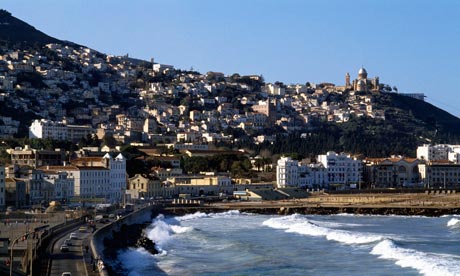
City of Algiers overlooking the Mediterranean, Algeria
Visitors can help bring Algiers out of the shadows. Photograph: Patrick Robert/Sygma/Corbia
Isn't is strange that a gigantic country with some of the most beautiful coastline on Earth, a luminous hinterland of mountains vast and deserts idle, crowned with the most alluring capital city I know, should be just three hours from London and almost unvisited by travellers?
We used to go: well-to-do Victorians loved wintering in Algeria. But modernity has been cruel to this great gorgeous land, and even by the standards of war-torn Africa, Algeria's is an awful story. We associate it with the violent end of French colonialism, civil war in the 90s that cost up to 200,000 lives, and sporadic terror attacks. But this is a gross underestimation of a magical place, and a delightful and beguiling people.
With its Phoenician, Roman, Byzantine, Ottoman, Barbary pirate and French colonial heritage, Algeria has a hoard to dazzle any enthusiast of culture, architecture, literature, art, design, ornithology, botany or geography. I went, apprehensively, because I was following migrating swallows from Cape Town to Wales. At the airport, they impounded my binoculars – unwelcome because of "security". Policemen toted Kalashnikovs. "Security!" everyone said, cheerfully. "Bon courage!"
As it turned out, I felt as safe there as anywhere in Africa, and had the pleasure of discovering a world beyond guidebooks. I made lucky decisions: with my money and my visa running out, I resolved to throw all that remained of both at Algiers – "Alger la blanche" (Algiers the white). I loved it all: the foaming purple bougainvillea; the scents of mimosa, pine, spice and coffee; the roads floating through hillsides above the great sea; the Ottoman palaces; the scent of grilling lamb in the warren of the casbah; the harbour front with its snowy colonial buildings endlessly colonnaded (the old post office looks like a palace of ice-cream; no wonder Le Corbusier was in awe of Algiers) and the rich dark cafes… I wanted never to leave.   
The casbah is a Unesco world heritage site, a burnt umber miracle, sweet with the song of goldfinches. The neo-Byzantine cathedral of Notre Dame D'Afrique is remarkable: the inscription within, "Our Lady of Africa, pray for us and the muslims", is a hopeful sentiment.
In the casbah, older cafe owners will tell you how they survived French paratroopers. ("We lived in the walls", one said. "In the walls, you understand?") The Great Mosque of Algiers is one of the few remaining examples of Almoravid architecture, with a 14th-century minaret. Just inland from the port, off the main street, is where most of the restaurants are. Follow your nose: mine led me to the most delicious lamb chops I have ever eaten – and as a Welshman I take chops seriously. And Algerian coffee is superb. The Martyrs' Monument is a strange and rather awful triple-pillared concrete structure. It looks like what it is – an outraged howl of mourning raised to the sky.
All Algiers goes down to the seafront to relax: here are lovely spaces in which to meet the locals (Algerians treasure their few visitors) and to wonder at the shattered piles of fishermen's houses below the sea wall, where people lived just above the waves.
My other good decision was to stay at the expensive but unforgettable El Djazair hotel, popularly known by its former title, the St George. The new wing is excellent. Crucially, the efficient management will fax you a confirmation of your reservation, which you will need for your visa if you go independently. (The Algerian embassy issues visas on the 21st of each month.) Once in Algeria, you are at liberty to travel where you will.
If God were to grant Algeria an overdue break, and lift her out of the grasping claws of President Bouteflika's clique and beyond the fists of its tiny extremist minority, Algiers would be the San Francisco of the region, gateway to deserts, mountains and coasts beyond reckoning. (Reputable companies offer tours to Tamanrasset, the Touareg capital of the Sahara.) In the spring the Kabylia region, in the north-east, is said to be like paradise. The coastal town of Tipaza, west of Algiers, is so beautiful that French writer Albert Camus said it taught him the meaning of glory – love without limit.
As it is, Algeria has the clearest light I have ever seen, and she needs you – to see her, to appreciate her and, in beginning to know her, to help her out of the shadows.
• El Djazaïr Hotel (hoteleldjazair.dz) has doubles from £195. British Airways (ba.com) flies from Heathrow to Algiers from £260 return. From 2011 Explore (0844 499 0901explore.co.uk) has a three-night Algiers & Ancient Kingdoms break (plus optional excursions to Cherchell and Tipaza), from £937 including flights, B&B and tour guide.

Etiketler: , , , , , , , , , , , , , ,

24 Temmuz 2016 Pazar

Egypt


Egypt officially the Arab Republic of Egypt, Arabic:  جمهورية مصر العربية , is a country mainly in North Africa, with the Sinai Peninsula forming a land bridge in Southwest Asia. Egypt is thus atranscontinental country, and a major power in the Mediterranean Basin, the Middle East and the Muslim world. Covering an area of about 1,010,000 square kilometers (390,000 sq mi), Egypt is bordered by the Mediterranean Sea to the north, the Gaza Strip and Israel to the northeast, the Red Sea to the east, Sudan to the south andLibya to the west.
Egypt is one of the most populous countries in Africa and the Middle East. The great majority of its over 81 million people[4] live near the banks of the Nile River, in an area of about 40,000 square kilometers (15,000 sq mi), where the only arable land is found. The large areas of the Sahara Desert are sparsely inhabited. About half of Egypt's residents live in urban areas, with most spread across the densely populated centres of greater CairoAlexandria and other major cities in the Nile Delta.
Monuments in Egypt such as the Giza pyramid complex and its Great Sphinx were constructed by its ancient civilization. Its ancient ruins, such as those of Memphis,Thebes, and Karnak and the Valley of the Kings outside Luxor, are a significant focus of archaeological study. The tourism industry and the Red Sea Riviera employ about 12% of Egypt's workforce.
The economy of Egypt is one of the most diversified in the Middle East, with sectors such as tourism, agriculture, industry and service at almost equal production levels.

Wikipedia 

Etiketler: , , , , , , , , , , ,